Admin Sohail
Quick Answer
A small business is generally an independently owned and operated company that stays under specific revenue or employee limits set for its industry. In the United States, the Small Business Administration (SBA) sets these limits, and they vary a lot by industry, from around 7.5 million dollars in average annual receipts for many service businesses to as many as 1,500 employees for some manufacturers. There is no single universal number that applies to every business. At worldblueglow.com, we get asked this question a lot by readers trying to figure out if their company qualifies for small business loans, grants, or contracts.
Introduction
I have looked into small business classification more times than I can count, mostly because clients and readers assume it is one simple number. It is not.
In this guide for worldblueglow.com, I will break down how the SBA actually defines a small business, why the definition changes by industry, and how you can check where your own business stands. I will also cover why this classification actually matters beyond just curiosity.
How Does the SBA Define a Small Business?
The SBA defines a small business using size standards tied to a company’s specific industry, measured through either average annual revenue or number of employees. These standards live under a set of federal regulations known as 13 CFR Part 121.
Revenue-Based Standards
Most service industries, retail businesses, and professional service firms are measured by average annual receipts. This average is typically calculated over the company’s most recent five fiscal years.
- A management consulting firm might have a threshold around 24.5 million dollars
- A full-service restaurant might sit closer to 11.5 million dollars
- Many general service businesses fall under a 7.5 million dollar guideline
Employee-Based Standards
Manufacturing, mining, and some wholesale trade industries are measured by employee count instead of revenue. This is usually calculated as an average headcount over a recent period rather than a single snapshot.
- Some manufacturers can have up to 1,500 employees and still count as small
- General construction often uses a threshold closer to 1,500 employees as well
- Smaller manufacturing niches may have limits in the low hundreds
In my experience explaining this to business owners, the employee-based side confuses people the most, because they assume “small” always means under 50 or 100 people. That is often not true at all.
Why Does the Definition Change by Industry?

The size standard changes by industry because a company’s scale looks completely different depending on the sector it operates in. A 10 million dollar company might be enormous in construction but genuinely tiny in professional consulting.
A Quick Comparison
| Industry Example | Typical Standard Type | Approximate Threshold |
|---|---|---|
| Management consulting | Revenue based | Around 24.5 million dollars |
| Full-service restaurants | Revenue based | Around 11.5 million dollars |
| General construction | Employee-based | Around 1,500 employees |
| Many general service businesses | Revenue based | Around 7.5 million dollars |
This table is a simplified snapshot. Every NAICS (North American Industry Classification System) code has its own specific number, and the SBA reviews these figures periodically, so they do shift over time.
What Is a NAICS Code and Why Does It Matter Here?
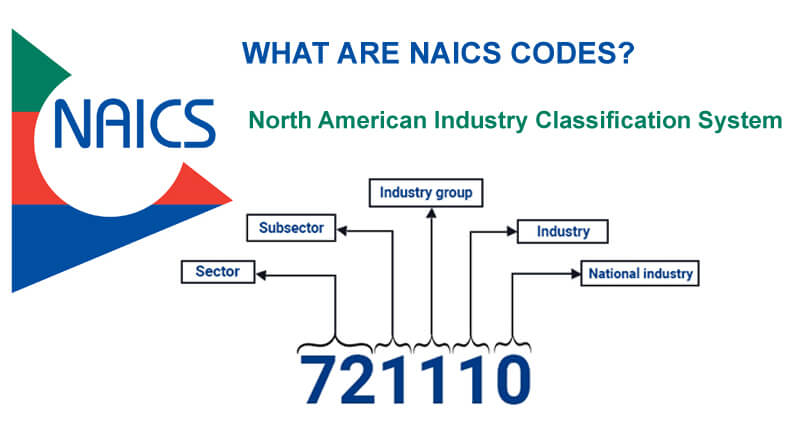
A NAICS code is a standardized number assigned to a specific industry, and the SBA uses it to determine which size standard applies to your business. Without the correct code, you cannot accurately check your size standard.
How to Find Your Size Standard
- Identify the NAICS code that matches your primary business activity
- Look up that code in the SBA’s official table of small business size standards
- Compare your average annual receipts or employee count against that specific threshold
- If you operate under multiple NAICS codes, check each one separately, since your status can differ by code
I have seen business owners assume their whole company is either small or not, when in reality they might qualify as small under one code and not another, depending on which contract or program they are applying for.
Does the SBA Definition Apply to Taxes Too?
No, the SBA definition of small business is not the same one the IRS uses for tax purposes. This is one of the more common misunderstandings I run into.
Two Separate Systems
- The SBA definition matters for federal contracting, SBA loans, and small business certifications
- The IRS uses its own gross receipts test under tax code rules to decide things like whether a business can use the cash method of accounting or avoid certain employer mandates
Which definition actually matters depends entirely on what you are trying to do. If you are chasing a federal set-aside contract, the SBA standard is what counts. If you are deciding how to file taxes, the IRS rules take over instead.
What About Affiliated Businesses?
Affiliation rules matter because the SBA can combine your business with related companies when calculating your size, even if your individual company is genuinely small on its own.
When Affiliation Applies
- You own a controlling stake in another business
- Another company controls your business
- Your business is under common ownership or control with another entity
Pro Tip: In the research I have done on this topic, this is the part that trips up the most business owners applying for contracts or certifications. If you own 51 percent of two separate companies, the SBA can add both companies’ revenue together when checking your size, even though each one looks small individually. If you have any ownership stake in another business, it is worth double-checking this before assuming you automatically qualify as small.
FAQ
What is generally considered a small business?
A small business is typically an independently owned company that stays under a specific revenue or employee threshold set for its particular industry by the SBA.
Is there one universal size limit for small businesses?
No. The SBA sets different thresholds for different industries, so a business can be considered small in one sector and not in another.
How many employees can a small business have?
It depends on the industry. Some manufacturing sectors allow up to 1,500 employees, while many other industries use revenue instead of employee count altogether.
What revenue counts as a small business?
For many service industries, average annual receipts under roughly 7.5 million dollars qualify as small, though the exact figure depends on the specific NAICS code.
Does the SBA definition apply to small business loans?
Yes, SBA size standards are commonly used to determine eligibility for SBA loan programs, along with other certifications and set-aside contracts.
Is the SBA definition the same as the IRS definition?
No. The IRS uses separate gross receipts tests for tax purposes, which are different from the SBA’s size standards used for contracting and certifications.
What is a NAICS code, and why does it matter?
A NAICS code identifies your specific industry, and the SBA size standard tied to that code determines whether your business is classified as small.
Can a business be small under one NAICS code but not another?
Yes. If a company operates under multiple NAICS codes, it must check its size standard for each one separately, since results can differ.
How often does the SBA update its size standards?
The SBA reviews money-based standards periodically, generally at least every five years, and adjusts them when needed based on economic conditions.
Why does small business classification even matter?
It affects eligibility for federal contracts, SBA loans, certain tax treatments, and various small business certification programs, so getting it wrong can cost real opportunities.
Conclusion
There is no single number that defines a small business everywhere. It depends heavily on your industry, whether your sector is measured by revenue or employees, and which agency’s definition you are actually working with. If you are unsure where your business stands, checking your specific NAICS code against the SBA’s table is the most reliable starting point. At worldblueglow.com, we try to make these kinds of confusing classification questions easier to navigate, one guide at a time.